
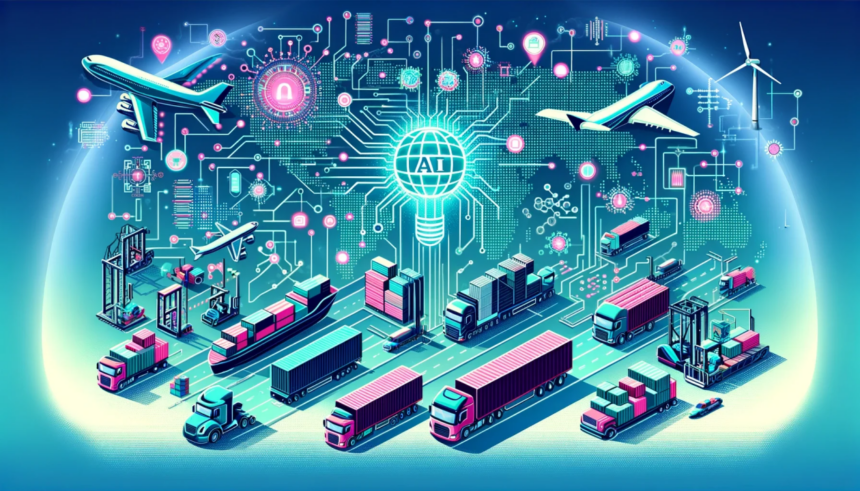
Logistics and supply chain operations have always been a balancing act—speed vs. cost, reliability vs. flexibility, and efficiency vs. visibility. Today, global disruptions, volatile fuel prices, and rising customer expectations have made this balance even harder to maintain. Artificial Intelligence (AI) is transforming how companies handle this complexity.
- Why AI Has Become Critical in Modern Supply Chains
- Smarter Demand Forecasting with Higher Accuracy
- Route Optimization for Faster, Cheaper Deliveries
- Warehouse Automation and Intelligent Inventory Management
- Supplier Performance Monitoring and Risk Control
- End-to-End Visibility Across the Supply Chain
- Documentation, Reporting, and Automated Content Creation
- Local Distribution and Regional Optimization
- Sustainability Meets Cost Control
- Challenges in Adopting AI for Supply Chains
- How Small and Mid-Sized Logistics Businesses Gain an Edge
- The Future of AI in Logistics and Supply Chain
- Frequently Asked Questions
AI doesn’t just make logistics faster—it makes it predictive, adaptive, and resilient. In this guide, we’ll explore how intelligent systems reduce operational costs, minimize delays, and deliver true end-to-end visibility across the supply chain.

Why AI Has Become Critical in Modern Supply Chains
Traditional supply chains are mostly reactive—a problem occurs, then teams respond. AI flips this model to proactive decision-making.
By analyzing real-time and historical data—orders, inventory levels, weather conditions, traffic patterns, and supplier performance—AI predicts risks before they escalate. This enables businesses to act early, not after damage is done.
The result? Faster decisions, fewer surprises, and smoother operations.
Smarter Demand Forecasting with Higher Accuracy

Demand forecasting is the backbone of supply chain planning. AI models study historical sales, seasonal trends, promotions, and external market signals to generate highly accurate forecasts.
This significantly reduces:
- Overstocking (which ties up capital)
- Stockouts (which hurt sales and customer trust)
With AI, forecasting moves from guesswork to data-driven confidence, making inventory planning both leaner and more cost-effective.
Route Optimization for Faster, Cheaper Deliveries
In logistics, routes directly affect fuel costs and delivery times. AI-powered routing systems continuously evaluate:
- Live traffic conditions
- Fuel prices
- Weather disruptions
- Delivery constraints
They then recommend the most efficient routes in real time. The impact is immediate—lower fuel consumption, faster deliveries, and better last-mile performance.
What makes AI even stronger is learning. These systems improve continuously as more data flows in.
Warehouse Automation and Intelligent Inventory Management

Warehouses are the nerve centers of supply chains. AI optimizes inventory movement, storage placement, and picking sequences.
AI-driven insights answer questions like:
- Which products should be stored closer to dispatch?
- Which items move fast vs. slow?
- Where is space being underutilized?
This leads to faster picking, lower labor costs, and a shift from static inventory rules to dynamic, real-time inventory intelligence.
Supplier Performance Monitoring and Risk Control
Suppliers can be either the strongest or weakest link in a supply chain. AI analyzes supplier data to identify patterns linked to:
- Late deliveries
- Quality issues
- Reliability risks
With these insights, businesses can proactively diversify suppliers, renegotiate contracts, and avoid disruptions. AI turns risk from an unexpected shock into an early warning signal.
End-to-End Visibility Across the Supply Chain
Without visibility, supply chain planning becomes blind. AI-powered dashboards provide real-time tracking from raw materials to final delivery.
Teams can instantly spot bottlenecks, respond faster to disruptions, and make informed decisions. This transparency builds trust—not only internally but also with customers who expect accurate updates and reliability.
Documentation, Reporting, and Automated Content Creation
Logistics operations generate heavy documentation—shipment updates, compliance records, internal reports, and vendor communications.
Automated content creation tools help teams quickly generate structured drafts and summaries for:
- Shipment notifications
- Operational reports
- Internal updates
With human review in place, businesses achieve speed without sacrificing clarity or accuracy.
Local Distribution and Regional Optimization
For local warehouses, distributors, and service hubs, discoverability and coordination matter. When AI insights are combined with professional local SEO services, logistics providers can significantly improve regional visibility.
This helps optimize:
- Location-based discovery
- Trust signals
- Inbound business inquiries
Local efficiency often becomes the silent driver of overall supply chain speed.
Sustainability Meets Cost Control
Fuel waste, idle inventory, and inefficient routing hurt both profits and the environment. AI reduces waste and optimizes resource usage across the network.
Lower emissions and smarter utilization help companies stay compliant while also gaining a competitive advantage. Sustainability is no longer just a policy—it’s a performance strategy.
Challenges in Adopting AI for Supply Chains
AI adoption isn’t without hurdles. Common challenges include:
- Integrating data from legacy systems
- Ensuring data quality and consistency
- Managing cybersecurity and privacy risks
A phased rollout, strong governance, and viewing AI as a core system—not just a tool—help reduce these risks.
How Small and Mid-Sized Logistics Businesses Gain an Edge
AI is no longer limited to global giants. Smaller logistics firms can now use AI-powered forecasting, routing, and tracking tools to compete effectively.
Even with limited resources, they can deliver reliability, speed, and visibility at scale. AI is democratizing efficiency.
The Future of AI in Logistics and Supply Chain
Future supply chains will be self-healing. AI will detect disruptions, automatically adjust plans, and reroute deliveries with minimal human intervention.
Companies that adopt AI early will build supply chains that are agile, resilient, and cost-efficient. The future of logistics depends less on trucks and warehouses—and more on intelligence.
Frequently Asked Questions
Will AI replace logistics jobs?
No. AI automates repetitive planning and monitoring tasks, allowing humans to focus on strategy, coordination, and decision-making.
Is automated content creation useful for supply chain teams?
Yes. It speeds up reporting and communication while maintaining consistency and structure.
Why are local SEO services important for logistics businesses?
They help logistics providers get discovered by regional clients and partners, improving inbound opportunities.
Is AI adoption expensive for logistics companies?
Not necessarily. With scalable tools and phased implementation, AI can be highly cost-effective.